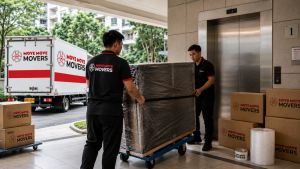
Streamline your move with our ultimate packing checklist—essential tips for organized, stress-free relocation. Ensure nothing gets left behind with Move Move Movers’ expert guidance
One of the most stressful aspects of moving is packing. When considering how to pack for a move, a smart approach is first to gather the moving supplies you’ll need and then systematically go room-by-room until the job is done. Follow Move Move Mover checklist for moving to make the process more manageable and creates less stress.
house mover Singapore
Working packing plan
Turn a room-by-room list into a controlled move
The detailed room checklist below tells you what to pack. Use this as a packing list for moving and a practical packing guide for a home move: it shows when to decide, how to label, what stays under your control and how to hand the final carton count to the moving coordinator.
01 · Work backwards
Use a packing timeline, not one exhausting weekend
A practical packing-to-move checklist starts from the confirmed access window and destination readiness. Adjust the lead time to the home, inventory, work schedule, children, pets, special items and building procedures; the sequence matters more than pretending every move needs the same number of days.
PLAN
Confirm the move and what is not moving
Record both addresses, property access, preferred window, item groups, bulky or fragile items and the first keep–store–dispose decisions. Photograph cupboards and storage areas before estimating materials.
REDUCE
Separate decisions before packing starts
Create visible zones for moving, owner-carried essentials, storage, disposal and undecided items. Do not let an undecided pile enter the moving load by default.
PACK
Start with low-use rooms and categories
Pack books, decor, spare linens and other non-essential items first. Keep one carton register and use the same destination codes throughout the home.
LOCK
Close the final 48–72 hour decisions
Finish most rooms, prepare appliances according to their instructions, photograph electronics and cables, confirm the first-unload sequence and keep immediate-use items outside the load.
HAND OVER
Count, point out exceptions and walk every room
Confirm cartons by destination zone, identify owner-packed fragile items, record late additions and check cupboards, high shelves, balcony, service yard and storage spaces before departure.
02 · Responsibility
Choose self-pack, partial packing or an assessed packing scope
The right split depends on time, cupboard volume, item categories, fragility, owner custody and the accepted quotation. Write down exactly which rooms or item groups each party will finish.
SELF-PACK
You control the full carton process
Select sound materials, pack and seal the contents, keep the carton register and tell the moving coordinator which boxes are fragile, heavy, owner packed or excluded.
PARTIAL
Split the job by room or category
Keep simple categories with the household and identify the kitchen, fragile items, electronics, office or other groups that need assessment. Avoid a vague “help with the rest” handoff.
ASSESSED
Record inventory, materials and boundaries
Ask the written quotation to state the accepted item groups, materials, packing date, handover, exclusions and whether moving, unpacking, storage or disposal is separate.
“Bedroom” is not enough when several rooms or family members share the destination. Use a short code on more than one visible face and keep private contents in a separate register.
BR203 / 08UPRIGHTOPEN A
WHERE
Destination zone
Use the new-home room or zone, not only the pickup room. Example: BR2 · WARDROBE.
WHICH
Carton number
Number within the zone: BR2-03 of 08. The count makes a missing-carton check faster.
HOW
Handling instruction
Add UPRIGHT or FRAGILE only where needed. A label never replaces suitable internal protection.
WHEN
Open priority
Use A for first-night or immediate-use cartons and a lower priority for items that can wait.
04 · Owner-controlled kit
Keep the first night and critical records outside the moving load
Adapt the essentials kit to the household, medical needs, children, pets, work and new-property handover. It should travel with the person responsible for it.
Identity & access
Passports and identity records
Keys and access cards
Tenancy, purchase or building papers
Health & care
Medication and immediate medical items
Children’s or pet essentials
Water, simple food and first-night toiletries
Work & devices
Phones, laptops and portable drives
Chargers and power bank
Access tokens and critical work records
First-unpack
Basic bedding and a change of clothes
Cleaning supplies suitable for the new home
Offline copy of contacts and destination plan
05 · Final control
Finish with a room, count and condition handover
Before the last load leaves, walk the pickup home in one direction. Confirm intentionally remaining items, late additions and the final carton count by zone. At the destination, keep pathways clear, direct placement from the label plan and record visible exceptions before disposing of packaging.
READY
The load is controlled when
Every carton has a destination and count.
Move, storage, disposal and owner-carried items are separated.
Fragile, bulky and special items match the accepted scope.
Access and the destination contact are confirmed.
HOLD / CHECK
Pause the affected item when
The destination or responsibility is still unclear.
A carton is damaged, overloaded or cannot close correctly.
An added item changes the agreed inventory or handling need.
A device or special item lacks the required owner preparation.
Turn the checklist into a quote briefSend rooms, cupboards, item groups, photos, access, dates and the packing split.
Packing is one of the most crucial phases of moving. By organizing items based on common functions, room use, or other factors, it makes it easier to keep track of your belongings during transport and unpack at your new place.
Here are some easy packing guidelines:
Pack like items together. Start packing each box with a layer of padding – it can be newspapers, bubble wrap, or household goods, like blankets or towels. Then, put the heaviest items into the box first.
We cannot say this enough: Label each box by room and by its contents.
Pack a box of essentials – screwdrivers, hammers, snacks, drinks, toothbrushes, a change of clothes, paper plates, plastic utensils and cups, a first-aid kit, medications, etc.
Refrain from filling boxes to the brim. This prevents boxes from becoming super heavy and reduces the likelihood that they break or are dropped during transit.
Singapore Movers
That settled, let’s move from room to room with packing checklists and tips.
Start By Gathering Your Moving Supplies
To ensure a successful move, you’ll need the following moving supplies:
Gather cheap or free packing and moving boxes: Use websites like NextDoor Neighbor to search for used boxes or ask your friends and family. Gather a variety of sizes and make sure the packing boxes are in good condition.
Buy bubble wrap (or try to find it for free): Bubble wrap keeps your items protected during the move. And best of all, you can buy it at office supply or department stores inexpensively or find it free on Facebook Marketplace.
Rent a dolly: Carrying boxes between places becomes taxing and could lead to drops. To prevent them from happening, rent a dolly from a home improvement store or moving company as it makes moving much easier.
Go Room-By-Room With This Moving Checklist
Start by making an inventory of the items you plan to take. Do this based on each room — this will help you organize faster and keep track of your valuable possessions. From there, gather moving supplies such as packing and moving boxes, padding, tape, and blankets — everything you’d need to protect your things during transit.
When you go to pack your items, try to combine them based on function — for example, pack kitchen supplies together.
Lastly, don’t forget to mark your moving boxes so you know exactly where it goes in your new home. On the top and sides of your box note the room name, the contents of the box, and whether or not items inside of the box are fragile. For example, a box you packed from the kitchen could say “kitchen/everyday dishes/fragile.”
Here are some additional packing checklist items for each room of the house:
The kitchen
Defrost the refrigerator: At least 48 hours prior to moving out.
Organize dishes:Packing dishes for moving isn’t as hard as you might think. Just make sure to pack them carefully by wrapping them in bubble wrap. And refrain from overpacking boxes. Overpacking will make it more difficult to move the boxes and if a box incurs damage, you could lose a whole grouping of plates.
Use sectioned boxes for your glasses: It’s a simple, secure way to transport them.
Pack small appliances: Start by removing any blades or loose components. Tape the cord around the appliance, tape any additional parts to it, and be sure to include the instructions.
Pack dry goods: Tape paper or bubble wrap around seasonings and pack jars containing spices or food on the bottom so they don’t move around during transit.
For refrigerated goods: Store them in coolers with ice.
Moving of luxury marble table
The dining room
Roll up the rug: Secure in plastic or use a rope.
Pack chairs: By removing the legs and placing them in a moving box with the nails/casters in a labeled plastic bag.
Secure kitchen table: By wrapping it in a blanket and placing it in an area where it doesn’t slide around.
Pack decorations(this includes lamps, pictures, artwork, etc.): By wrapping any items containing glass or ceramics in paper or bubble wrap.
The living room and den
Secure electronics: For TVs and computers, secure the screens using a blanket and unscrew the base (if the device has one). Tape the screws and base to the back of the TV.
Pack furniture: Place furniture into the moving truck before packing moving boxes. Remove the legs off the couch and chairs to make them easier to maneuver into your new home.
Keep electronic components organized: Tape the power cables to each electronic component along with the HDMI or audio auxiliary cables and remote control.
Handle artwork and mirrors carefully: Wrap them in blankets or bubble wrap.
Prepare your coffee table for transport: Put furniture sliders under the legs so you don’t scratch the floors when you move it. Cover the top of the table with a blanket to prevent scratching.
Remove bulbs and lampshades from lamps: Store in boxes, and cushion carefully. Wrap the base of the lamp in bubble wrap if it’s fragile.
Pack your books, CDs, and DVDs in separate boxes: Don’t make boxes too heavy or they’ll break.
The bedrooms
Pack casual clothing: Fold them and place them in moving boxes. For formal wear, consider buying wardrobe boxes that allow you to keep the clothing on hangers during transport.
Organize jewelry: Put all valuables in a container you keep on you at all times during the move.
Pack mattresses: Put them in bed bags that will keep the mattress protected from the elements during the move.
Keep all bedding and pillows clean: Put them in trash bags to keep out dust and place them in labeled moving boxes.
Pack toiletries together: Make sure to have easy access to them for your new home. The bathroom will likely be the first room you unpack.
Organize towels: Pack towels, toilet paper, soap, and more in one box for each bathroom your new home has.
The laundry room
Move appliances: First, unplug the washer and dryer. Next, disconnect all components including the dryer vent and washer hose, and tape the power cords to each appliance.
Throw away detergents and fabric softeners: They’re dangerous to transport.
Use laundry hampers/baskets as moving boxes: Pack hampers with socks, T-shirts, and more for an easy move.
The garage/storage shed
Pack lawn furniture cushions: Put them in boxes or trash bags.
Dispose of hazardous materials: Get rid of any paint, fertilizer, or weed killer — these are hazardous to move.
Pack tools: Put them in a tool chest. For items like a saw or hammer, wrap them in towels then pack them in boxes.
Drain the items requiring gas: For your grill or mower, drain the gas before transporting the item. Remove the gas tank from the grill (if applicable) and turn it in before moving.
Deflate pool toys: This will make it easier to pack them in boxes. s.
Take your bike with you: Use a bike rack on your car or SUV for safe transport.
Frequently Asked Questions
What packing supplies do I need for moving?
When considering how to pack for a move, you’ll need to buy or find items such as boxes, tape, blankets, a moving truck or trailer, and rope for securing loose items.
Where can I get free packing and moving boxes and supplies?
Moving is a common reality for many of us, which means once someone completes their move, they won’t need their supplies any longer. Websites such as Facebook Marketplace or Freecycle are filled with people giving away free moving supplies. Make sure to check these out a few weeks before Moving Day.
How do you pack dishes for a move?
Layer the bottom of the boxes with packing peanuts or paper. From there, wrap each plate in a layer of bubble wrap then stand the dishes up in the box. This is the best way to keep them secure. And once tightly packed, don’t forget to write “FRAGILE” on the box.
How do I organize items before moving?
A great tip is to go room by room and organize items in each into three categories: Items you plan to keep, items you plan to donate, and stuff that goes into the garbage. Organizing before a move makes it much more manageable, as you only take the items you need.
How should I pack a moving truck?
You’ll want to pack the heaviest items such as furniture and appliances into the truck first. Secure them with fasteners so they don’t slide around. Next, add in the bulkiest remaining items before filling the truck with boxes. And for luxury/fragile items or electronics, it’s ideal to pack them into your vehicle where they remain more secure.