Large household furniture
Sofas, mattresses, bed frames, standalone wardrobes and large cabinets. Send full dimensions and identify any parts that can be safely separated.

Oversized and awkward item removal
Bulky item disposal and removal in Singapore starts with the item and the route out. Send dimensions, known weight and access photos for oversized furniture, heavy pieces or awkward loads so the handling plan and bulky-item removal quotation can be assessed together.

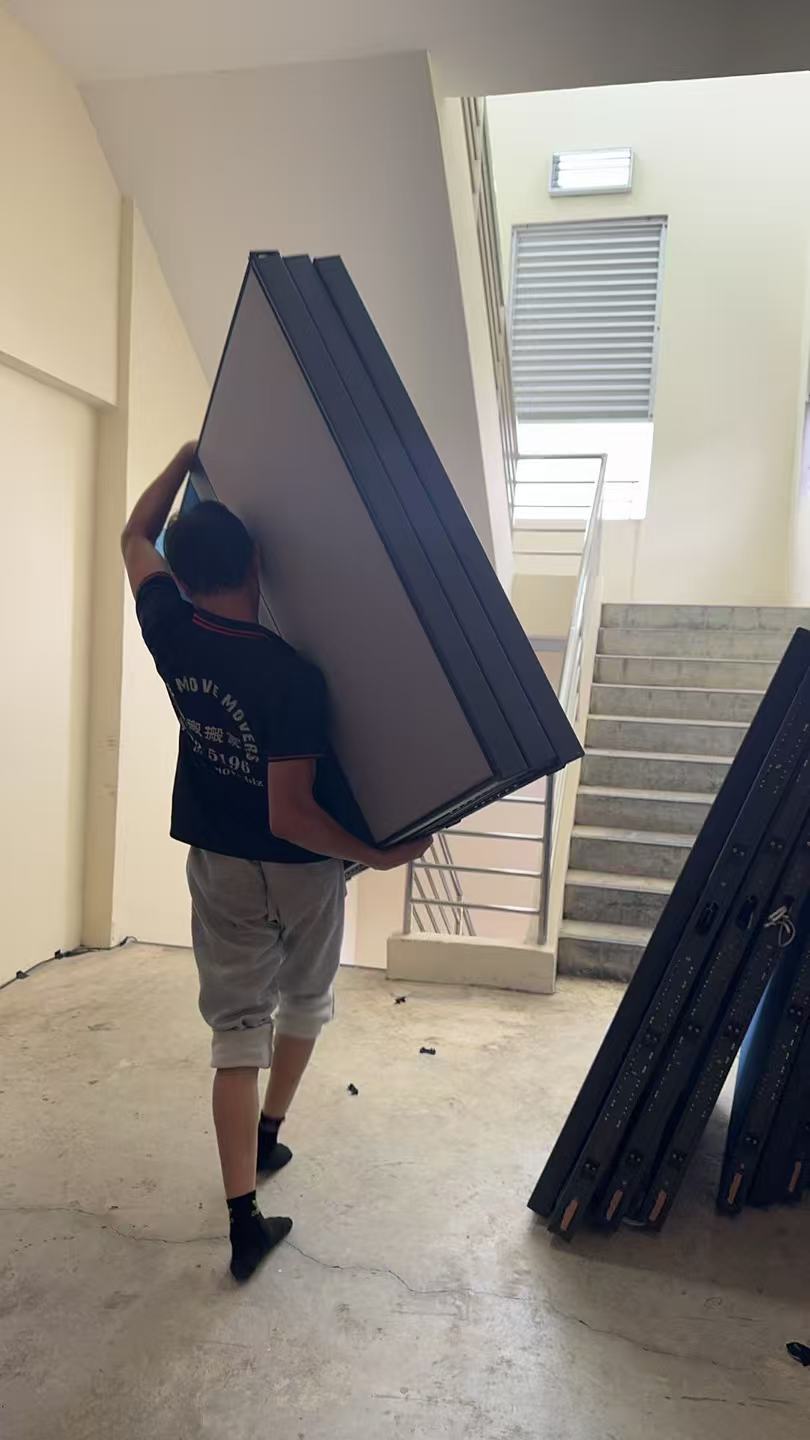
Real partition handling · access matters










01 / Size is only part of the job
Move Move plans bulky-item removal for oversized, heavy or awkward furniture and other assessed items. Our in-house crew, tailgate lorry and agreed dismantling are planned around the full route out—not simply whether the item fits in a vehicle.
Sofas, mattresses, bed frames, standalone wardrobes and large cabinets. Send full dimensions and identify any parts that can be safely separated.
Safes, glass or stone furniture and unusual equipment need a specific assessment. Provide material, model and known weight; do not guess that ordinary trolley rates cover special handling.
Partitions and large loose panels can be awkward at narrow stairs or lifts. Identify fixings, dismantling needs, building restrictions and whether the item is to be disposed of or retained.
Built-in carpentry, renovation debris, electrical items and dangerous goods are not interchangeable with ordinary bulky furniture. Identify them before booking so acceptance, handling and the onward route can be checked separately.
02 / Know what you are comparing
2026 ordinary-disposal reference, GST included. It includes 2–3 movers, a tailgate lorry and simple dismantling where needed. The accepted items, trolley count and final amount must be confirmed from complete photos or an item list and a written quotation.
An oversized cabinet, safe or fragile tabletop is not automatically one standard trolley load. Item size, weight, dismantling and access determine whether the reference guide applies; special handling needs its own confirmed scope.
Separately assessed: loose-item packing, stairs, carrying heavy items over more than two doorsteps, safes or dangerous goods, condo pushing distances over 100 metres, basement pushing, lift exchange, complex dismantling and any unconfirmed scope or access condition. Do not assume these are covered by the reference rate.
To compare quotations fairly, use the same inventory and access details. Ask which dismantling and carry-out work is included, what would change the total, and which collection window has been confirmed.
Send photos and a list of the items you want removed. We assess the load, then confirm the trolley count, accepted items and any agreed dismantling or access charges in the written quotation. A missing measurement need not stop your first enquiry; tell us what you know and we will clarify what is still needed.
03 / Measure before the crew is booked
Photograph the front, side and any loose sections. Include height, width and depth, material, model and known weight. Flag glass, stone, moving mechanisms or unstable parts.
Show detachable legs, doors, shelves or connected panels. Do not start breaking an item apart; agree whether dismantling changes the safe handling plan.
Photograph the room exit, corridor corners, lift entrance and interior, stairs and landings. The narrowest doorway alone does not describe the turning space.
Include floor level, steps, lift changes, basement access and the pushing distance to the loading point. Tell us if parking or the loading bay needs a booking.
The review determines the crew, carrying method, vehicle and agreed dismantling. A difficult route may need more information before a quotation can be confirmed.
Show the route from the room to the lift, including door grilles, corridor turns and any steps. For a walk-up unit, include each staircase and landing; indoor carry-out is part of the assessment.
Check management requirements, permitted work hours, service-lift and loading-bay bookings. Tell us about basement access, lift changes and long pushing distances before the quote is agreed.
Show internal stairs, gates and the distance to a suitable loading point. A ground-floor address does not necessarily mean the item has a clear, level route out.
See practical bulky-item access challenges for HDB, condo and landed properties →
04 / Actual handling photographs
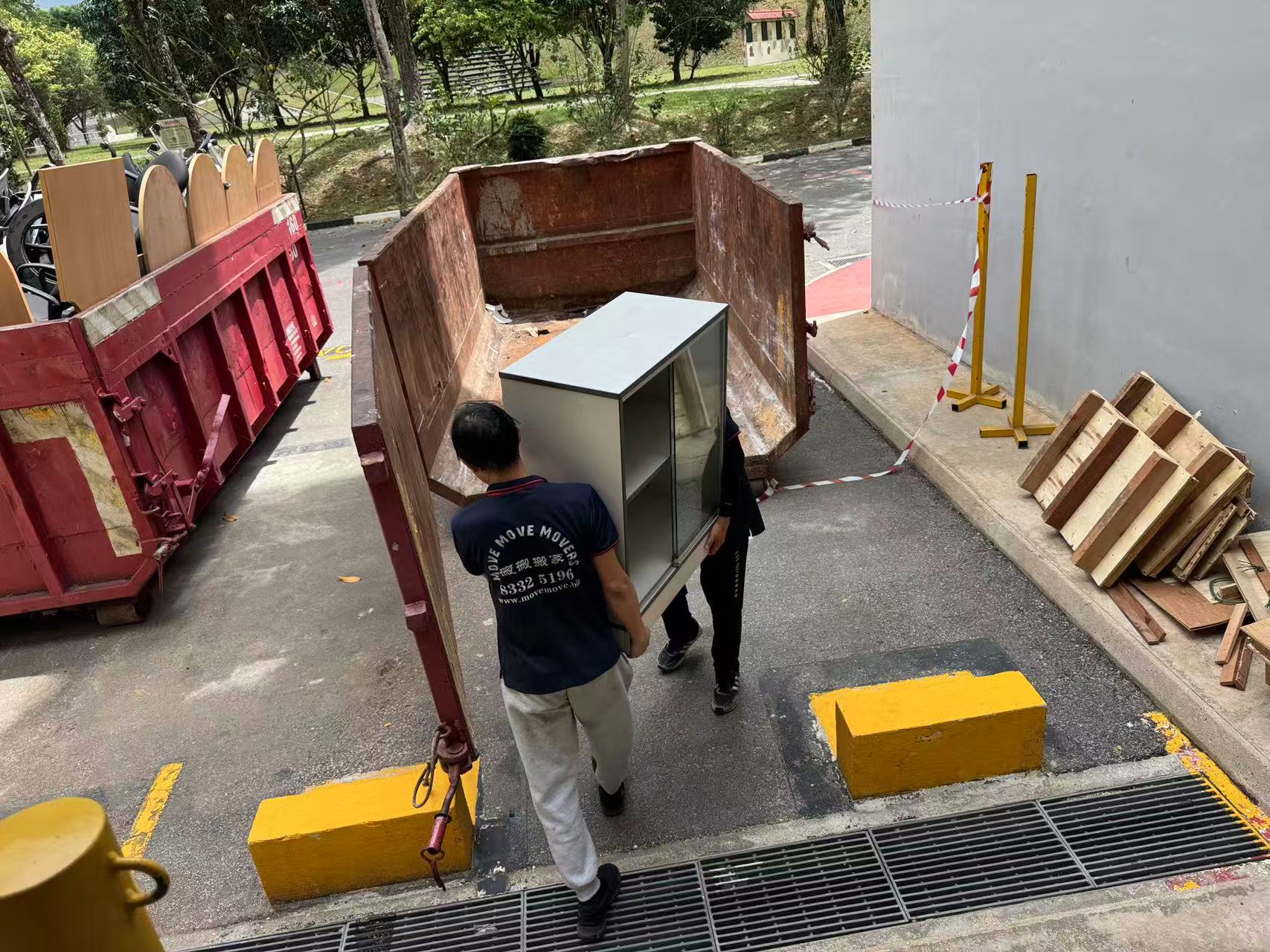
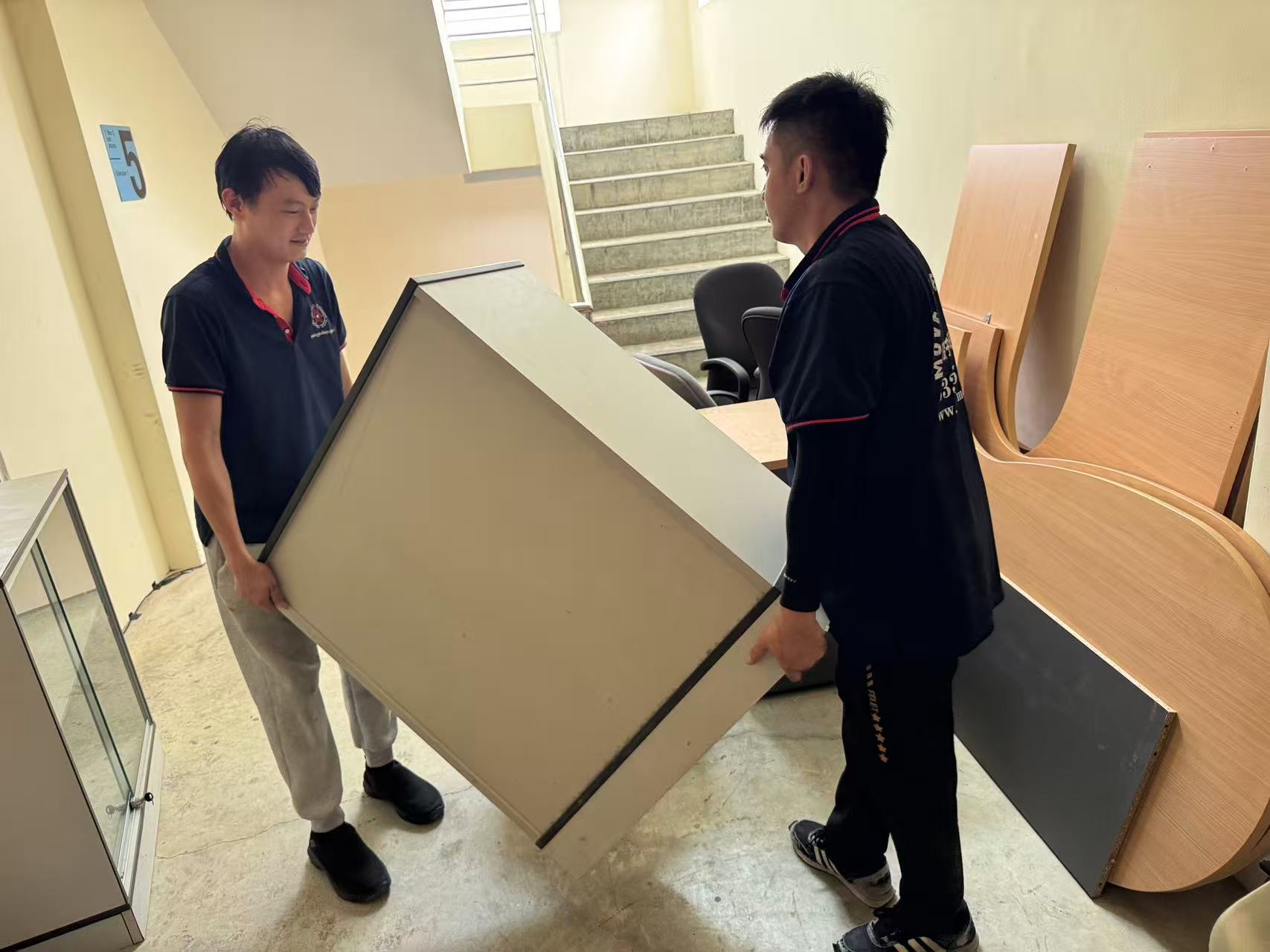
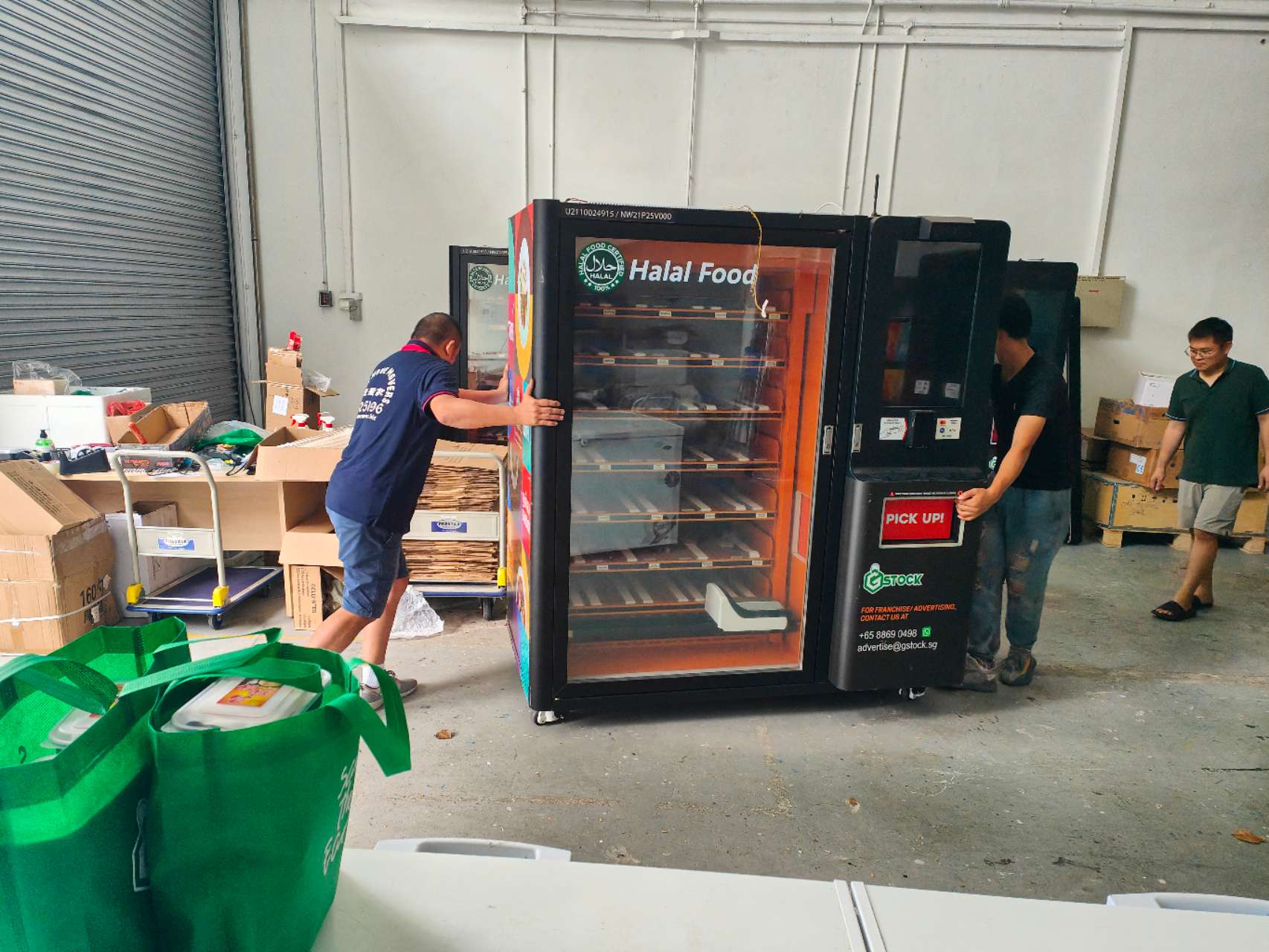
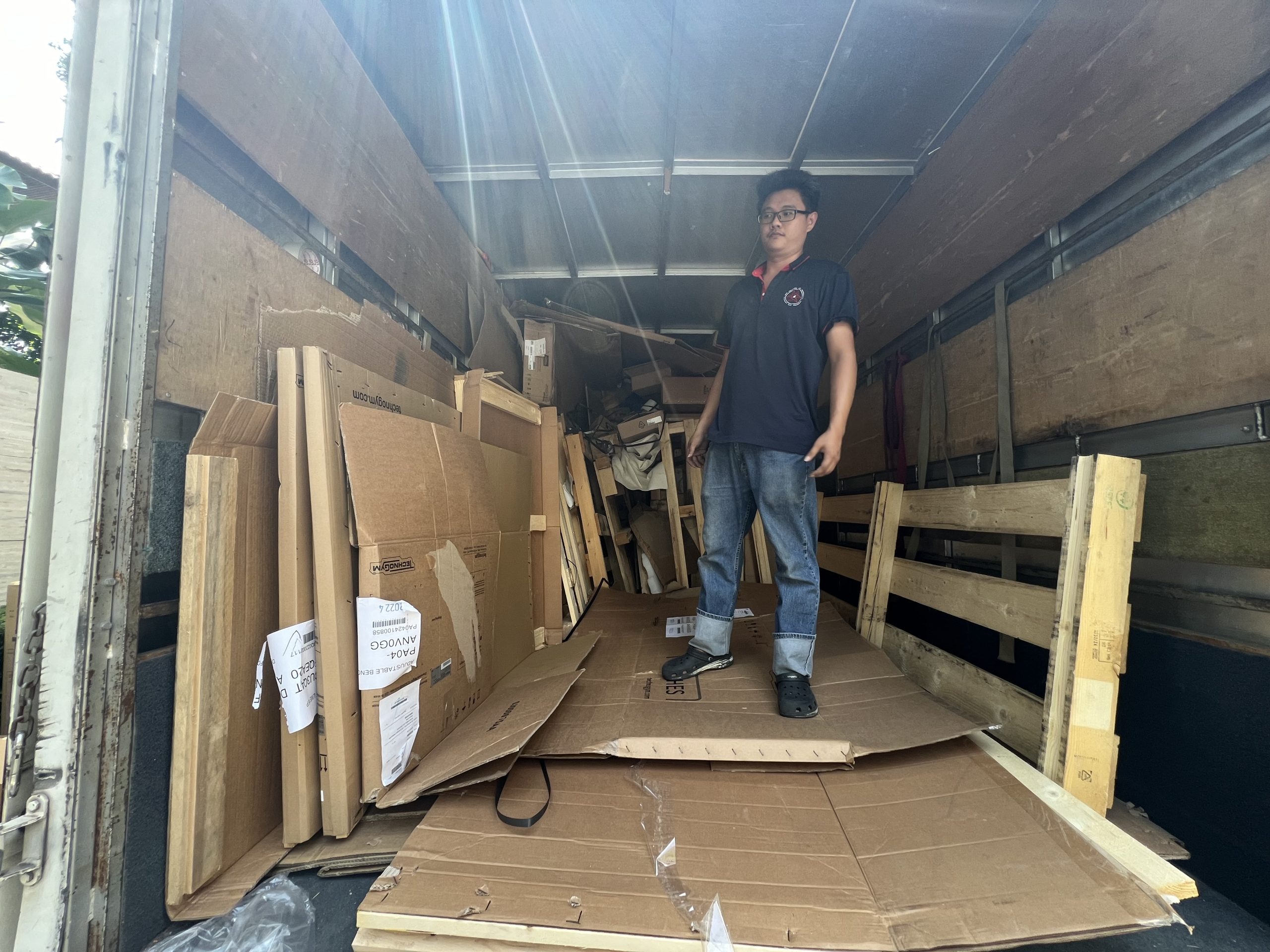
The staircase photograph at the top shows partition handling on a restricted route. These separate photographs show access, handling and loading work; the cabinet-and-skip image shows disposal loading. Equipment-handling examples are not disposal-completion records. Your quote is based on your own items and access.
05 / Public collection or private handling
For HDB flats, NEA directs residents to their Town Council for other bulky items. Check eligibility, quantity limits, dates and collection point with the council that serves your home. Ask whether indoor carrying and dismantling are covered before relying on a free bulky-item collection arrangement.
For private housing, NEA identifies the estate’s Public Waste Collector at a separate fee, or a licensed waste collector, for other bulky items. Large household appliances have a different collection route.
Use an assessed private scope when your job needs agreed dismantling, indoor carry-out, a heavy or awkward load, multiple items or a timing plan outside the available public arrangement. Send photos of the item and the whole route so the quotation covers the actual work.
The label “bulky waste” does not make all materials acceptable. Separate ordinary furniture, electrical items, renovation waste and any unusual materials in your enquiry.
Town Council disposal guide · NEA bulky-item guidance · NEA e-waste guidance
Move Move can coordinate disposal through licensed providers and facilities, with recycling or donation pathways and disposal certificates available where applicable. The relevant provider or facility holds its own licence. Item acceptance and any required records must be agreed before booking; collection does not mean every item will be recycled or donated.
A simpler way to get a quote
START WITH WHAT YOU KNOW
Tell us what needs to go: oversized cabinet or other bulky items. Add the floor and whether there is a lift. You do not need to know the trolley count or have every measurement ready.
You can request indoor carry-out from its current room. Show the route and agree the work in the quote; stairs, long carrying distances and difficult access are assessed separately. Keep shared corridors and escape routes clear.
Photos and an item list are the starting point. If size, condition, fixings or access are unclear, we will ask for more details before confirming the price. For a replacement delivery or urgent job, include your deadline; collection remains subject to confirmed availability.
Need urgent or same-day disposal? Include your latest completion time. Sending an enquiry does not reserve a slot.
Before you book