Check your Town Council
Confirm the council for your block, then read its current bulky-item rules. Eligibility normally depends on the address, item type, count, access and available collection slot.












For an HDB home, first check the bulky-item service provided by your own Town Council. Many councils offer a complimentary service for a limited number of eligible movable items, but the allowance, counting method, booking lead time, collection point, charges and exclusions vary. Read the current terms and book before placing anything outside your flat. If the job needs indoor carrying, dismantling, several items, a fixed deadline or a full move-out, compare a suitable private disposal route instead.
Official links and published terms checked: 6 August 2026.Rules can change. Open your council's page before collection day.
Move Move Movers does not represent any Town Council and cannot confirm eligibility or accept a council booking. The official service page linked for your address makes the final decision.
Confirm the council for your block, then read its current bulky-item rules. Eligibility normally depends on the address, item type, count, access and available collection slot.
Town Council collection is generally an HDB route. Ask the management office about disposal access, lift protection, loading times and the approved collection point before arranging removal.
NEA directs private homes to the relevant Public Waste Collector or a licensed waste collector for other bulky items. Confirm the item and fee directly with the provider.
Open the entry for your council. The short notes highlight useful differences, but the linked official page or booking form remains authoritative.
Published snapshot: up to three items per household each month, booked at least three working days ahead, with weekday afternoon collection. Items must fit the lift and be manageable by one worker. The service does not include entering the home or dismantling.
Official bulky-item removal pagePublished snapshot: one booking a month; the first three approved items are complimentary and the next two carry a nominal fee. The page states a 2.1 m × 0.9 m size limit and gives combination-counting examples.
Official bulky-items pagePublished snapshot: one booking a month for up to three items, normally with two working days' notice and weekday afternoon collection. Renovation waste, dismantling, very heavy items and objects that cannot use the lift are excluded.
Official bulky-item service pagePublished snapshot: up to three items a month, generally booked three days ahead for weekday afternoon collection. Moving-house waste, renovation debris, built-ins and items needing more than two workers are outside the stated scope.
Official bulky-item removal pagePublished snapshot: the first three approved items each month are complimentary and additional accepted items are listed at $5 each. The HDB service does not include carrying items from inside the home.
Official bulky-items pagePublished snapshot: up to three items a month for eligible HDB homes, booked at least three working days ahead, with Monday-to-Saturday afternoon collection. Dismantling, glass, pianos, safes and gym equipment are among the exclusions.
Official bulky-item removal pagePublished snapshot: up to three items a month, with charges for additional approved items and at least three working days' notice. Built-ins, renovation, moving and commercial waste are outside the service.
Official bulky-items pageCurrent route: Jalan Kayu is a new council after the 2025 changes. Its stable entry leads into the live booking system, which did not expose a complete durable public terms page when checked. Use that flow rather than a saved token or copied limit.
Official booking entryPublished snapshot: one booking a month for up to three items, normally with three working days' notice and weekday afternoon collection. Moving, renovation, dismantling, commercial waste and lift-incompatible items are excluded.
Official bulky-items pagePublished snapshot: the renamed council offers eligible HDB homes up to three items a month; additional items are handled separately by the contractor. Built-ins, moving waste and items needing more than two people or unable to fit the lift are excluded.
Official bulky-item service pagePublished snapshot: the first three approved items each month are complimentary, with Tuesday-to-Saturday afternoon collection. Commercial, moving and renovation waste plus built-ins, glass, pianos and gym equipment are excluded.
Official bulky-items pagePublished snapshot: one booking a month for the first three approved items, normally with three working days' notice and weekday afternoon collection. Large furniture must be prepared to pass through the door and lift; check the page's assistance conditions.
Official bulky-item pagePublished snapshot: up to three approved items a month, normally with three working days' notice and daily afternoon collection except public holidays. The eligible-HDB service excludes dismantling, moving and renovation work.
Official bulky-refuse pagePublished snapshot: the new standalone council lists up to three items a month and Monday, Wednesday and Friday afternoon collection. Its page uses both three-to-five days and at least three working days, so book early and follow the live form.
Official bulky-refuse pagePublished snapshot: up to three items a month, booked at least two working days ahead, with Monday-to-Saturday afternoon collection. Moving, renovation, built-in furniture and some unusually large items are excluded.
Official bulky-item service pagePublished snapshot: up to three items a month, booked at least three working days ahead, with Monday, Wednesday and Friday afternoon collection. Moving-house work, built-in dismantling and renovation debris are excluded.
Official bulky-item pagePublished snapshot: one booking a month for the first three approved items, normally with three working days' notice and Monday-to-Saturday afternoon collection. The service generally does not enter the home; read its narrow assistance exceptions.
Official bulky-item services pagePublished snapshot: up to three items in each 30-day period, booked at least three working days ahead for eligible HDB homes. Moving, renovation, dismantling, heavy, glass and lift-incompatible items are among the exclusions.
Official bulky-item services pagePublished snapshot: up to three items a month per request, booked at least three working days ahead, with Monday-to-Saturday afternoon collection. The current page explains how dining sets, bed sets and sectional sofas are counted.
Official bulky-item service pageThe service is tied to the council's own HDB households. A town name in an old article may no longer match the current boundary, and a condo or landed home generally follows a different public or private route.
“Three items” may not mean three furniture sets. Councils publish different examples for dining tables with chairs, beds with mattresses and sectional sofas. Count the booking using that council's current definition.
Published lead times range from two working days to three working days or longer, and collection days are not uniform. A confirmed booking matters more than a general timetable copied from another council.
Many services expect the resident to move an eligible item to a confirmed point and do not enter the flat. Some publish limited assistance exceptions. Never leave an item outside before the location and timing are confirmed.
An item may be rejected when it cannot fit the lift, pass the doorway, be handled by the allowed crew or stay within a stated dimension. Measure the longest side and photograph the difficult access before booking.
Built-ins, dismantling, renovation debris, glass, stone, pianos, safes, gym equipment, moving-house waste and commercial items are commonly restricted, but the exact list differs. Some councils publish fees for approved extra items; others refer them to a contractor.
| Decision | Town Council route | Private disposal route |
|---|---|---|
| Property | Generally for eligible homes within the council's HDB blocks. | Can be assessed for HDB, condo, landed and commercial properties, subject to access and accepted scope. |
| Amount | Best for a small number of approved movable items within the council's current allowance. | Better suited to several items, a mixed load or a room/full-property clearance. |
| Indoor work | Many councils limit or exclude entering the home, dismantling and special handling; exceptions vary. | Indoor carrying, dismantling and access work can be assessed from photos, dimensions and the route. |
| Timing | Uses the council's available days, lead time and confirmed collection point. | A requested date and time window can be assessed, but availability must be confirmed in writing. |
| Price | Many councils publish a complimentary limited service; extra or excluded work may be chargeable or unavailable. | Price depends on items, manpower, access, dismantling, transport and disposal route. Compare the complete written scope. |
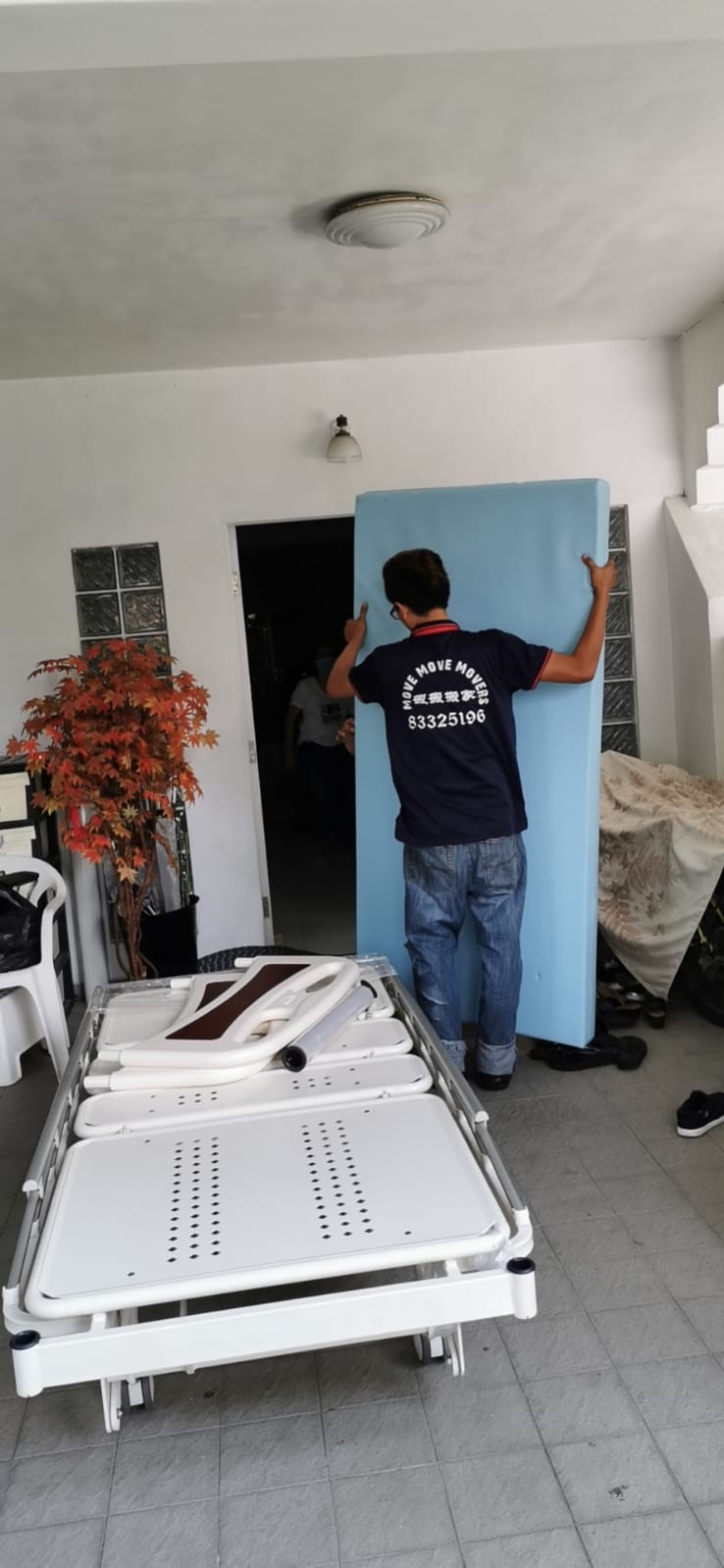
If the item is outside the council's allowance, needs indoor carrying or cannot pass through the access route as-is, compare furniture disposal with the exact item, dimensions and photos.
Glass, stone, safes, gym equipment, built-ins and very large furniture often need special assessment. Start with door-to-door bulky-item removal and disclose every difficult material.
Large household appliances and regulated e-waste may have producer or recycler routes different from normal bulky furniture. Use the appliance and e-waste disposal guide before booking.
Town Council household collection commonly excludes renovation waste and fixed installations. Confirm the contractor or licensed waste route; do not mix these materials into a household furniture booking.
When inventory, dismantling and a handover date must be coordinated, plan a full-house clearance from one written item list rather than making several unrelated bookings.
Town Council household services generally exclude commercial waste. Use the office disposal route and provide the site rules, lift/loading access and inventory.
Use your exact block address and the current official council list. Boundaries and names changed after the 2025 restructuring, so an old article or nearby block may point to the wrong council.
Many councils publish a complimentary limited service for eligible HDB households, but the number of items, counting method, extra-item charges and eligibility differ. Check your council's current terms.
A three-item monthly allowance is common, not universal. A dining set, bed and mattress, or L-shaped sofa may count as more than one item. Follow the council's own examples.
Do not assume they will—or that they never will. Many services require items at an approved point and exclude indoor carrying, while some councils publish narrow assistance exceptions. Confirm this during booking.
Many councils exclude dismantling and require an item to fit through the door, corridor and lift. If safe dismantling is needed, arrange it separately before the confirmed collection or use an appropriate private service.
Not before the council confirms where and when to place it. Early staging can block common access or be treated as improper dumping. Keep the item inside until the approved instruction is clear.
Check whether the council accepts the appliance, but also review NEA's regulated recycling routes. A retailer, producer or recycler may offer the more suitable channel for a large appliance or electronic item.
Consider it when the job needs indoor carrying, dismantling, multiple or excluded items, stairs, special handling, a fixed deadline, a full move-out or a non-HDB property. Send photos and access details before comparing quotations.
Send the item photos, quantities, dimensions, property type, floor, lift or stairs, carrying route, dismantling needs and deadline. The accepted quotation should identify the work and exclusions before collection.