










1. Plan Ahead: Timing & Permits
Peak windows
Start with the check-out date for your current room and the confirmed key-collection date for your next one. University calendars and housing arrangements differ, so use your own accommodation offer and residence instructions to set the moving window.
Compare available moving slots before booking travel. Leave enough time for room inspection, key return and unpacking, especially if your two accommodation contracts do not overlap.
Parking passes
For NUS or NTU accommodation, contact the office for your assigned hall or residence. Ask which vehicle entrance and unloading point to use, whether delivery registration is needed, and how key collection fits the delivery time. SIM and Kaplan students should follow the rules of their actual accommodation provider; the school address may be different from the home address.
For private rentals in Bukit Timah, Clementi, Geylang and other areas, send the exact block, unit, floor and postcode to the mover. Ask the landlord or building manager about the loading point, vehicle clearance, lift access and any moving application that applies to that address. Use our Moving & Site Access Guide to prepare the route and questions.
Small moves: Move Move’s standard residential moving reference is S$85 for one trolley load or S$100 total for two trolley loads.
Larger room moves: from the third trolley load onward, add S$40 for each additional trolley. Share photos of boxes, furniture and any items that need dismantling so we can assess the load.
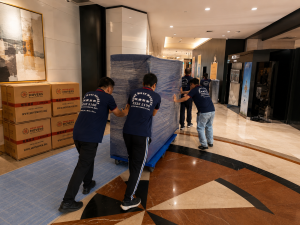
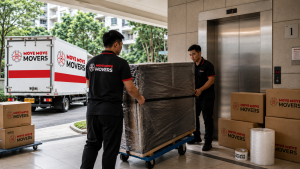
What the reference includes: 2–3 movers, a box lorry with tailgate, shrink-wrap protection and simple dismantling and assembly involving a few screws. Packing loose items, stairs, complex dismantling and other applicable access or special-item work are priced separately. These prices include GST; the final load, scope and amount are confirmed in your written quotation.
Access and parking: the standard staircase reference is S$10 per trolley load per level where two people can carry the load; heavy or awkward items need a separate assessment. Share both addresses and the loading route so any applicable charges can be included. Agree a lawful unloading point and any parking charges before moving day. See our moving price guide for the current reference.

2. Packing Smart: Materials & Labeling
Sort by category
Daily essentials (clothes, bedding, toiletries): use your suitcase or a reusable tote.
Books & documents: use small, sound boxes, keep each box manageable for the person handling it, and label it “Books.” Split a load that is difficult to carry rather than filling a large carton with books.
Electronics: wrap in bubble wrap or towels; fill any gaps with crumpled paper.
Flat-pack furniture: first check that the item belongs to you and may be removed. Follow the maker’s instructions for any dismantling; keep labelled fittings with the item and photograph the assembled furniture before packing.
Supplies source
Ask hallmates for spare cartons, or compare current second-hand listings by size and condition. Use clean, dry boxes with sound bases. If you book your move with us, ask about our loan boxes and packing materials; the quotation records any refundable box deposit and delivery or collection charges.
Pick up bubble wrap, packing tape, and labels from Daiso or FairPrice.
Inventory list
Photograph each packed box and keep a simple Google Sheet: “Box # – Contents.”
Mark boxes clearly—e.g. “Fragile,” “Textbooks,” “Kitchen.”

3. Move Methods: DIY vs. Pro
Self-drive van rental
A self-drive van can suit a light move if you have a suitable driver and can handle the loading safely. Compare the full booking cost: rental time, mileage or fuel, parking, ERP and any deposit or excess terms. Providers such as GetGo publish separate time and mileage rates; check the actual vehicle and dates before booking. Plan around your accommodation addresses, not your school’s location.
Professional movers
Ideal for medium-to-large loads or long distances (e.g. NTU→Changi).
The standard residential service includes the crew and handling described in the budget section above. Moving services have formal insurance; ask us how the applicable cover relates to your booking and items. Share your dates early so we can check availability and coordinate your residence access.
MRT + ride-hailing
For a suitcase or a few manageable bags, public transport or a passenger ride may be practical. Check the operator’s luggage conditions and arrange a vehicle that fits the load. Furniture, multiple cartons and items you cannot carry comfortably need a suitable goods-transport arrangement.
Elevator logistics
Ask your residence operator whether your delivery needs registration or a lift slot, and whether any deposit applies. Get the amount, payment method and return conditions for your actual building before booking the mover.
Check the unloading point and the full route to your room. If the vehicle cannot stop near the lift, send the mover photos or a route description so the carry distance, trolley access and any steps can be included in the plan.

4. Short-Term Storage & Cross-Border
Mini-storage
If you leave Singapore during a vacation, first ask your residence whether vacation storage is available. For a self-storage locker, check the unit size, location, access arrangements, minimum term and total charges. Lock+Store’s Singapore options provide a starting point for checking sizes and requesting a quote.
For collection, managed storage and later delivery, see our moving and storage service. Move Move’s minimum storage term is one month. The current ordinary-item reference is S$100 for the first two trolley loads for the minimum one-month period and S$30 for each additional load; irregular items need assessment. Collection and final delivery are separate transport trips. Customers do not enter the warehouse for self-collection. Interim retrieval requires at least one week’s notice and incurs handling, retrieval and transport charges; a deposit applies, and any optional storage-environment charges are set out in the quotation. These public prices include GST; the written quotation confirms the total.
Sea freight coordination
For belongings being shipped home, ask the freight provider for its collection date, receiving cut-off, packing requirements and destination charges before your housing contract ends. Keep travel documents, valuables and items needed during the trip with you, and separate the shipping inventory from anything staying in Singapore.
5. Unpack & Settle In
First priority: bedding and change of clothes—so you can rest comfortably.
Next: toiletries and simple kitchenware (instant noodles, utensils)—so you can eat right away.
Then: set up your study corner (desk, lamp) to stay on top of assignments.
Finally: electronics and décor; connect your router and chargers.
Where to check your accommodation arrangements
NUS: the individual Hostel Management Office handles check-in, check-out and vacation stay/storage applications. Contact the office for your assigned hostel rather than assuming that every NUS residence follows the same delivery arrangements.
NTU: use the dates in your hall offer and booking information. The accommodation FAQ explains key-collection slots and after-hours arrangements. Plan the delivery after access to your assigned room is arranged.
SIM and Kaplan: SIM’s main campus is at 461 Clementi Road, while Kaplan has a city campus. The campus is not necessarily your home address. Use SIM’s accommodation information or Kaplan’s student services to identify the provider, then confirm your residence’s check-in time and unloading arrangements.
Peer support
School and residence groups can help you find spare boxes and coordinate practical help. Agree who is helping, what they can carry and when they are available before relying on informal arrangements.
If you need arrival assistance, ask your school’s international student office or residence team what support is currently available and what it covers. Keep airport pickup, room check-in and moving household belongings as separate arrangements.
6. Extra Hacks & Cautions
Insurance: ask movers if they include “moving insurance” or if you need to top up separately.
Bulk-item disposal: for unwanted household items at an HDB flat, contact the relevant Town Council to check its collection service, eligible items and booking terms. For hostel or private-rental furniture, confirm ownership and the operator’s disposal arrangements first.
Tech setup: snap photos of your home-network cables before unplugging to avoid confusion on reassembly.
Payment: besides cash, many movers accept PayNow, GrabPay or credit cards (check for processing fees).