











Choose the right route before booking a lorry
A usable table, a broken refrigerator and a room full of unwanted furniture do not necessarily belong in the same collection stream. Sort items into things that can be passed on, ordinary bulky items, electrical equipment and anything requiring specialist advice.
| Your situation | First route to check | What to confirm |
|---|---|---|
| Furniture is usable | Donation, resale or a recipient who wants it | Condition, acceptance and a firm collection date. Do not assume a charity collects every item. |
| A small number of household bulky items | Your town council or property management’s arrangements | Eligible items, limits, fees if any, booking requirements and the agreed collection point. |
| Several items, in-home carrying or a deadline | A private disposal service | Accepted inventory, access, dismantling, collection window and the written total. |
| Electrical or electronic equipment | An appropriate e-waste collection channel | Whether that product type and size are accepted and whether pickup is available. |
| Office or whole-property clear-out | A scoped clearance service | Keep/dispose labels, access approvals, dismantling, special waste and handover requirements. |
Public arrangements differ by estate and property. Check your own town council or management rather than relying on a universal “free bulky collection” rule. Do not leave furniture beside a bin centre or in a common corridor without an agreed collection arrangement.
NEA provides guidance on bulky-item disposal, waste collection systems and e-waste channels. A private collection booking does not mean every item is recyclable or accepted.
Compare the same work. Public pickup may have item limits and a designated collection point; donation needs recipient acceptance and an agreed carry-out arrangement. Private removal can include assessed indoor handling or dismantling. Office work also needs destination labels and an approver. Give each provider the same inventory, collection point, access conditions and deadline before comparing quotations.
What does disposal cost?
Move Move’s ordinary disposal trolley rates below are GST-inclusive. They are a starting point for a confirmed scope—not a way to calculate every job from a single photograph.
| Ordinary disposal load | GST-inclusive rate |
|---|---|
| 1 trolley | S$85 |
| 2 trolleys | S$100 total |
| Each trolley from the third onward | Add S$40 per trolley |
The ordinary scope includes 2–3 movers, a tailgate lorry and simple dismantling where needed. The accepted items, trolley count, access conditions and final amount must be confirmed from the complete item list and photographs in the written quote. You can review the rate details on the Disposal Services Singapore page.
Six details that can change the job
- Items and quantity: show every item, including loose contents and small pieces.
- Size and weight: add measurements for large or unusual pieces; flag heavy items.
- Dismantling: distinguish simple furniture dismantling from fitted or built-in removal.
- Access: include stairs, lift dimensions, steps and the route to the loading point.
- Property rules and timing: confirm permits, collection windows and loading arrangements.
- Mixed loads: identify appliances, electrical items or materials that may need a different collection route.
When comparing quotations, compare the same inventory and carrying scope. A collection-only arrangement from an approved pickup point is not the same job as removing furniture from inside a unit.
Match the item to the right service
Use the item-specific guide when you need more detail. For mixed loads or an uncertain scope, start with the Disposal Hub and send the complete list together.
| Items or job | Useful next page |
|---|---|
| Sofas, beds, tables and loose wardrobes | Furniture disposal |
| Large or awkward household items | Bulky-item removal |
| Fitted wardrobes requiring removal | Built-in wardrobe removal and disposal |
| Mixed unwanted household items | Junk removal |
| Several rooms or a property handover | Full-house clearance |
| Office furniture and selected unwanted items | Office disposal |
| A coordinated office clear-out | Office clearance |
| Appliances and electrical equipment | Appliance and e-waste disposal guide |
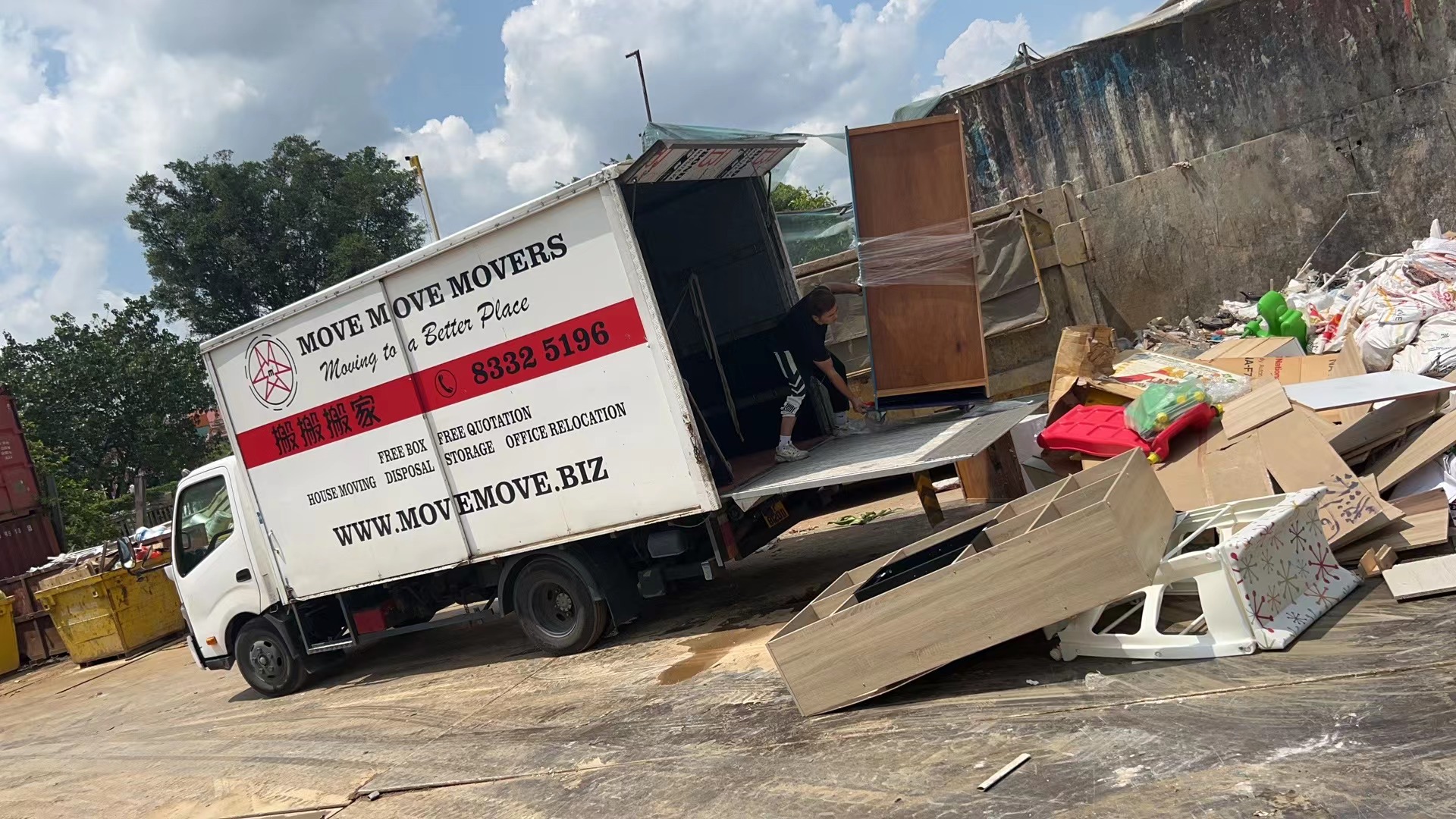
Do not mix chemicals, unknown liquids, pressurised containers, batteries or other potentially hazardous materials into an ordinary furniture load. Describe them separately and ask about an appropriate channel. For electronics containing personal or business information, arrange data removal before handing over the equipment; physical collection is not a promise of certified data destruction.
Prepare for a smooth collection
Send one complete quote brief
- Item list and photos: wide shots of the whole load plus close-ups of large or difficult pieces.
- Pickup address: property type, floor and unit access.
- Carrying route: lift or stairs, steps, corridor and loading-point distance.
- Extra work: dismantling, loose packing or items that may need special handling.
- Timing: preferred date, property collection hours and any handover deadline.
Empty drawers and cupboards, retrieve documents and personal belongings, and label items “keep” or “dispose”. If you are clearing only part of a room, show the crew the boundary before anything is carried out. Do not dismantle heavy furniture or disconnect equipment yourself unless it is safe and appropriate to do so.
Keep exits and the carrying route clear. Confirm any lift or loading-bay booking with management. On collection day, walk through the approved list and access conditions together; agree any extra items and revised charge before additional work starts.
For an office, appoint one person to approve the disposal list. Separate retained equipment and records, and confirm any contractor, access or building-protection requirements before the crew arrives. For a whole-home clearance, keep the final handover check separate from the physical collection.
Common disposal questions
Can I book disposal for just one item?
Yes. Send a photograph, dimensions if useful, and the access details. One item is not automatically one trolley or a fixed final amount; size, weight and handling still need to be assessed.
Can disposal be combined with a move?
Yes, but list the two scopes separately. Mark which items go to the new address and which are for disposal, and confirm both in the quotation. Do not rely on a verbal instruction once loading has started.
Do you collect from HDB flats, condos and landed homes?
Move Move can assess disposal requests for these property types. Provide the actual access conditions and confirm any management restrictions; the property label alone does not describe the carrying work.
Can I arrange urgent or same-day collection?
Ask about availability with the complete item list and access details. Do not assume a slot is confirmed until the team accepts the scope and timing. If you have a fixed handover deadline, allow time for assessment and property approvals.
Will all my items be donated or recycled?
Do not assume that collection guarantees donation or recycling. Condition, material and the receiving channel matter. If a particular reuse, recycling or documentation outcome is important, ask what can be confirmed before booking.
Can built-in furniture be treated like a loose wardrobe?
Not necessarily. Fittings, surrounding finishes and the removal work need assessment. Send clear photos and use the built-in wardrobe removal guide to prepare your enquiry.
Continue with the bulky-item disposal guide. If equipment is being moved rather than discarded, see gym-equipment moving.
Planning guidance for Singapore. Confirm the current terms with the service provider and the rules with your property management before booking.
Explore all moving guides